
Contacts
General
mail@sismografo.org
Booking visits and registrations
publicos@sismografo.org
About
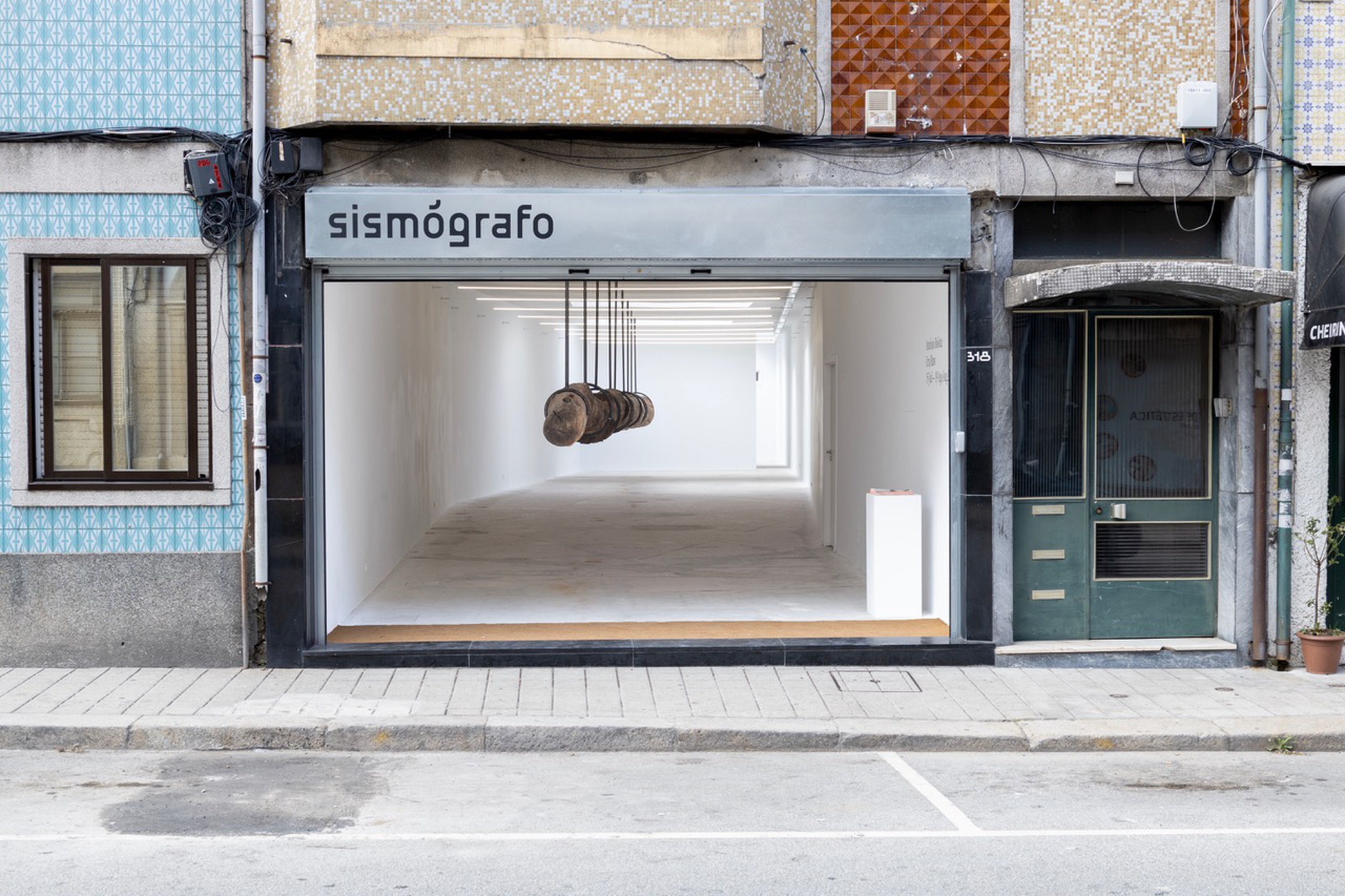
Founded in 2014, Sismógrafo has produced hundreds of public activities, with emphasis on a continuous program of exhibitions, also punctuated by initiatives related to performance, experimental music, literature and thought, directly involving dozens of artists and authors. The space, with a fixed opening schedule, from Wednesday to Saturday, from 15h to 19h, hosts regular public visits, as well as talks with artists and curators in the context of each exhibition, in close proximity and the dialogue between creators and community.
The inspiration came both from Yves Klein — from his famous “saut dans le vide” –, and from Aby Warburg, who understands the task of the historian as the activity of a seismograph, one who signals the singular instances of the present and connects them to a tradition. Harnessing the energies of contemporaneity, intuiting art’s future and most intense movements, offering them to our visitors: this has been our purpose for the last 12 years. And that is the way we intend to continue: thinking about art in an era where culture appears associated with industry, in a time of impoverishment of experience and reception, trying to answer to the challenges of the present.
Sismógrafo has a diverse team, bringing together different experiences and tools, both related to contemporary artistic and design practices and regarding logistic issues and project management. The collective that makes up Sismógrafo shares roles and responsibilities ranging from creating a coherent programmatic discourse, the assembly and production of exhibitions and other events, the publications of catalogues and artist editions and creating contents for supporting the exhibitions and implementing of public education initiatives.
At Sismógrafo, social dynamics are registered, experiences shaking underground are measured. We let ourselves be questioned by reality, by what is happening. It is not about following trends, which are swiftly overcome, but being up to the times. And, in the times we are now living, nature reminds us of our vulnerability, of our own finitude. Reality imposes itself in such a manner that seems to coerce fantasy. But, despite everything, the spirit survives, and in these difficult times, culture shows its resilience, it is celebrated as the bastion of human experience.
Many see these movements of crisis as an opportunity for political awakening, for social transformation. What reaction triggers this historical moment in artistic practice? How do artistic discourses respond to climate change, gentrification, and sexist violence in a society where patriarchy and neoliberalism form an alliance that insists on submission, discrimination, gender binaries, hatred towards difference through institutional racism, walls and borders, new colonialisms, through an attempt to take over all production, ruining and submitting the work of social reproduction? What progress is this that anexes and plunders nature, degenerating living conditions on a poisoned nature, destroying healthcare, education, fostering laboring realities of exploitation and financial systems that reach their tentacles towards the whole of the social fabric?
The demands of what is yet to accomplish in the past arrive from the future. Our program does not forget those demands. More than ever, we need empathy and reality, aggregation of life. We need expressive forms that remain minorities and survive tenaciously, we need to save the particular from indifference. We thus claim a fantasy that is not integrated, an absent image, escaping policies and an economic system that enslaves feelings. The forgotten leaves its marks, its traces. To make them visible, following their traces, is our task. This has to do with experience, with the way we build it and share it.
We understand Sismógrafo as an address for experience, a space for participation, cooperation and diversity. As Alexander Kluge puts it, interacting is a "natural remedy against prejudice". The program we present opens a new chapter in the history of Sismógrafo. Different forms of expression will form a constellation. Each exhibition will be autonomous and at the same time in each of them all the others will appear. Open, unexpected, each exhibition will present itself as a fragment of reality and a repair mechanism. An allergic reaction against fatality (Freud), trusting not only the intellect, but also the critical ability of the skin, our largest organ. Sismógrafo will present works that are not only a diagnosis of our time, they also contain a utopian content, as Stendhal mentions, a promesse de bonheur.
When realities such as the financial crisis or the pandemic, which strike, hurt and directly affect people's lives, are displayed by media outlets and social media as great works of fiction, we need an art that recombines documentation and fiction. In order to guide ourselves through the labyrinths of reality, we need not a beaten path but, as T. W. Adorno posits, the radical diversity of expression.